

Published on August 8, 2026
Periodic Knuckle Boom Crane Safety Inspection Process
A knuckle-boom crane works under heavy loads and is continuously exposed to the environment, vibration and wear during operation. That's why periodic inspection and maintenance are an important part of catching abnormalities early, reducing incidents, and keeping equipment performing well.
PALFINGER notes that regular maintenance extends equipment lifespan, increases safety, and keeps equipment ready to operate. Periodic inspection items also need to be carried out and recorded in full.
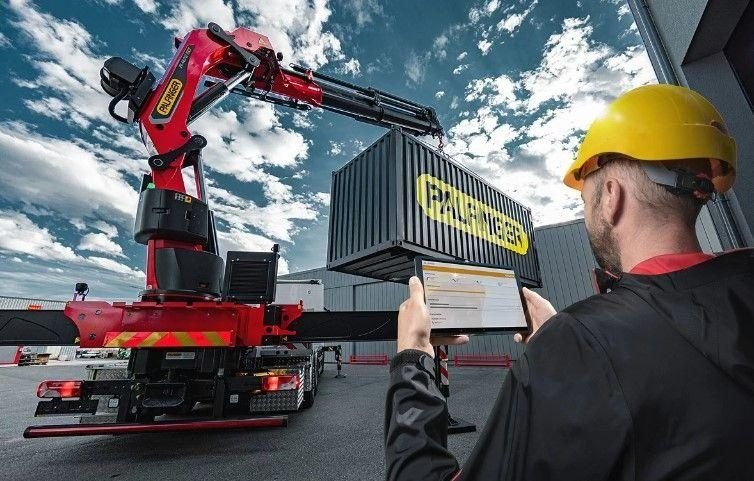
01. Overall equipment inspection
Technicians inspect the crane's exterior condition, focusing on load-bearing areas and parts prone to wear during use.
Signs such as cracks, deformation, looseness, wear or unusual damage need to be recorded and assessed before the equipment continues operating.
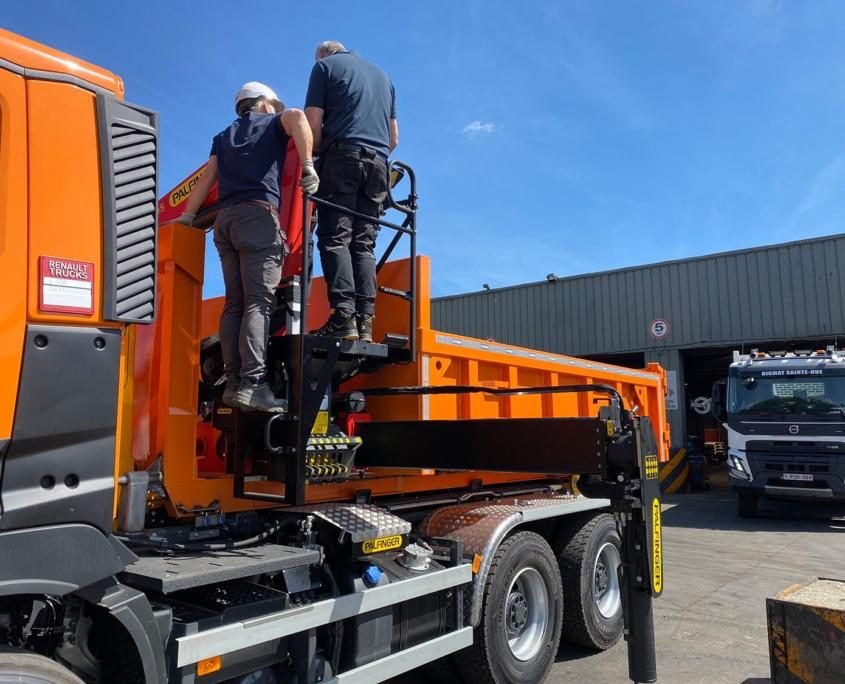
02. Hydraulic system inspection
The hydraulic system is inspected to detect:
- Oil leaks.
- The condition of hoses and fittings.
- Hydraulic cylinders.
- Oil level and condition.
- Any unusual signs during operation.
This is one of the most important inspection items, since the hydraulic system directly affects the crane's ability to lift, lower and be controlled.
03. Inspection of joints, pins and mechanical parts
Technicians inspect pins, bushings, bolts, joints and connection points for looseness, wear, or increased play.
Lubrication points are also checked and serviced according to the actual condition and technical requirements of each unit.
04. Operating function and safety system inspection
The crane is test-operated to assess the stability of movements such as lifting, lowering, slewing, extending and retracting the boom.
Control functions, warning systems and safety devices are checked at the same time. If an unusual response or fault warning is found, the technician identifies the cause before returning the equipment to service.
05. Diagnostic tool inspection and result logging
For items requiring in-depth diagnosis, PALFINGER uses support tools such as Smart Inspection and PALDiag. Smart Inspection guides technicians through inspection items step by step, while PALDiag supports in-depth diagnostics and testing. Inspection results are stored so the equipment's history can be tracked over time.
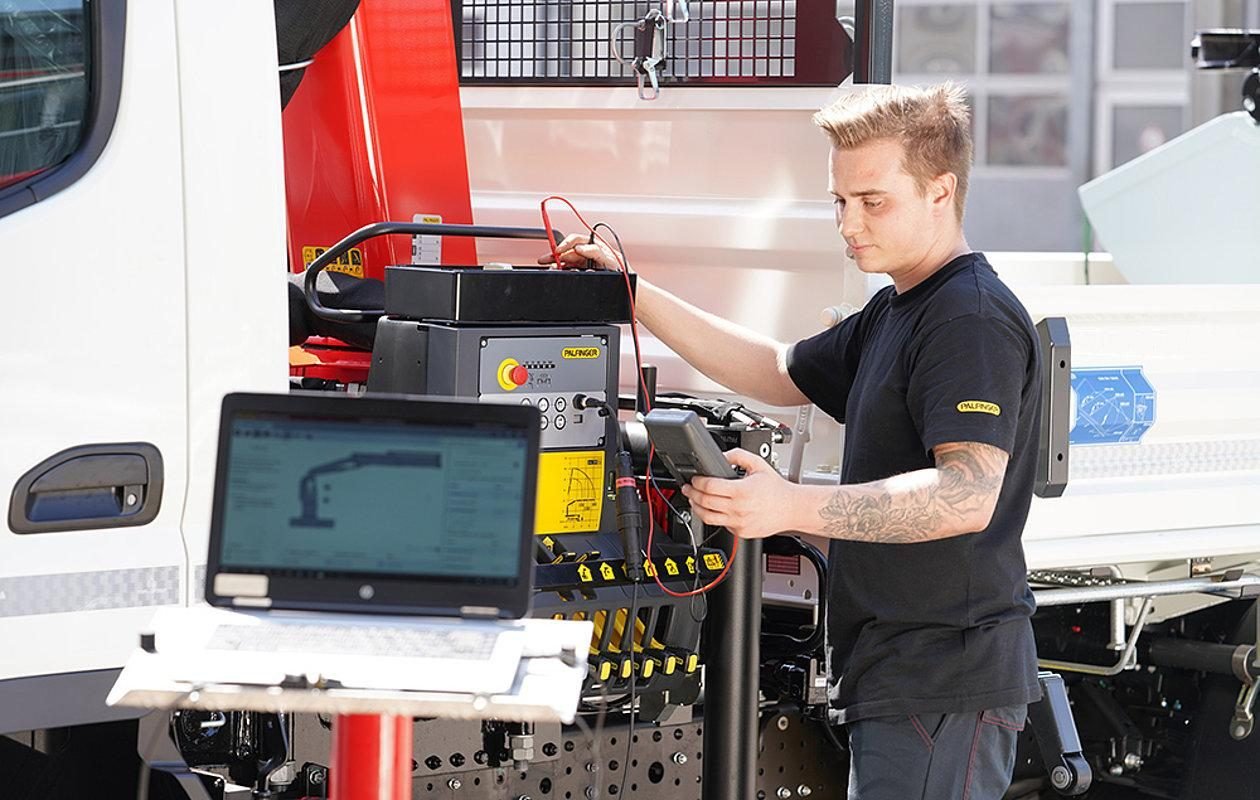
Inspection isn't just "checking a box"
A good maintenance process doesn't stop at finding a fault. What matters more is recording the equipment's condition, identifying the cause, and proposing the right course of action.
Keeping an inspection history also helps technicians track equipment condition across maintenance visits and proactively spot wear patterns over time. PALFINGER notes that inspection reports can be stored in the PALDesk system for easy reference.
PALFINGER VIPEC
With every maintenance visit, the technical team focuses on inspecting correctly, catching issues early, and addressing the right root cause — helping customers minimize downtime and keep their equipment in a safe operating condition.
Proper Maintenance Process – Correct Inspection Standards – Peace of Mind in Operation.
Note: Legal inspection requirements and frequency may vary by country regulation and the specific condition of the equipment. The actual process should follow the crane model, the manufacturer's technical documentation, and current regulations.
Need your crane inspected or serviced?
PALFINGER VIPEC's technical team is ready to survey your equipment and schedule the right maintenance or inspection for your crane model.